
145 Educators Across the U.S. Begin aiEDU's Fall 2026 Trailblazer Fellowship
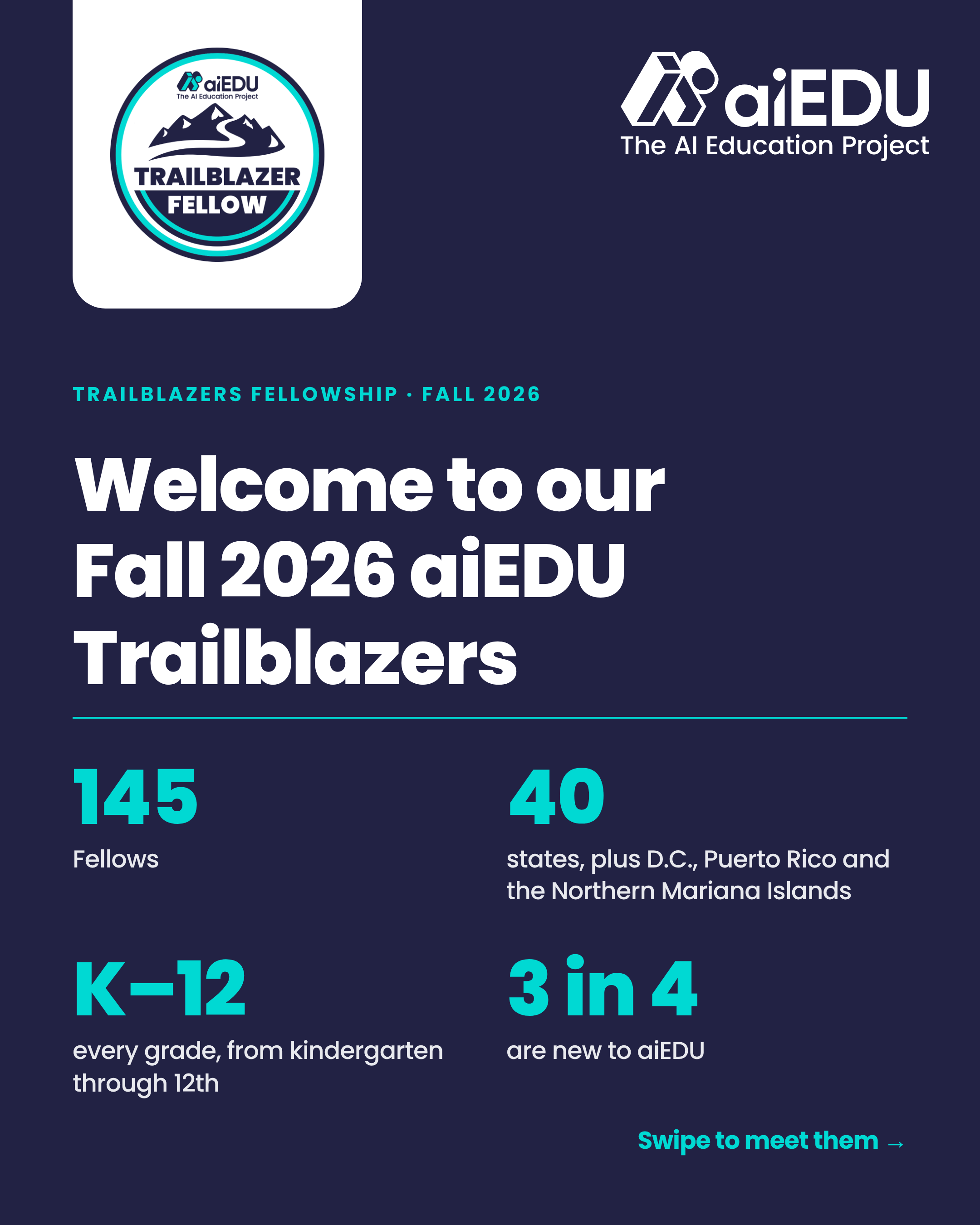
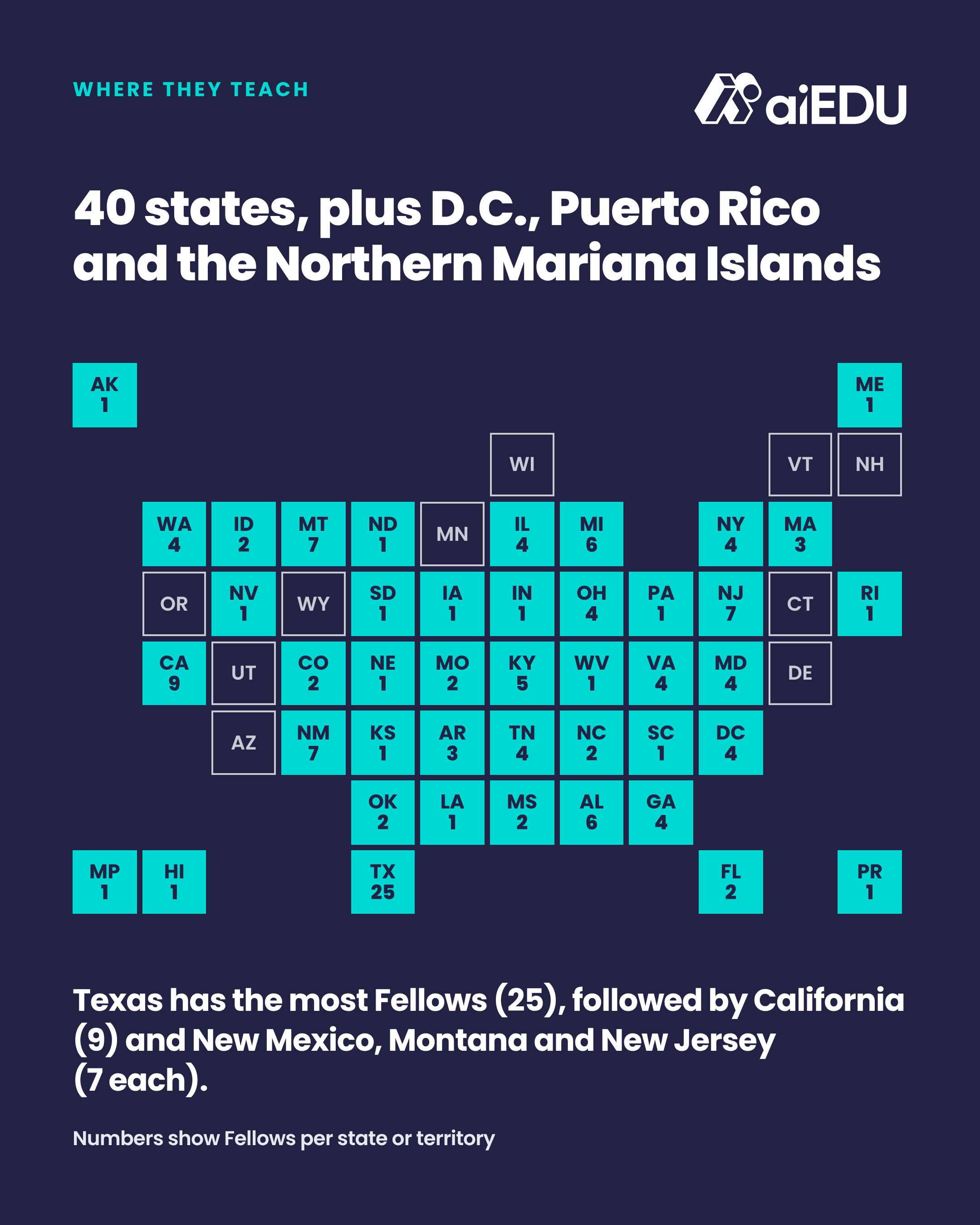
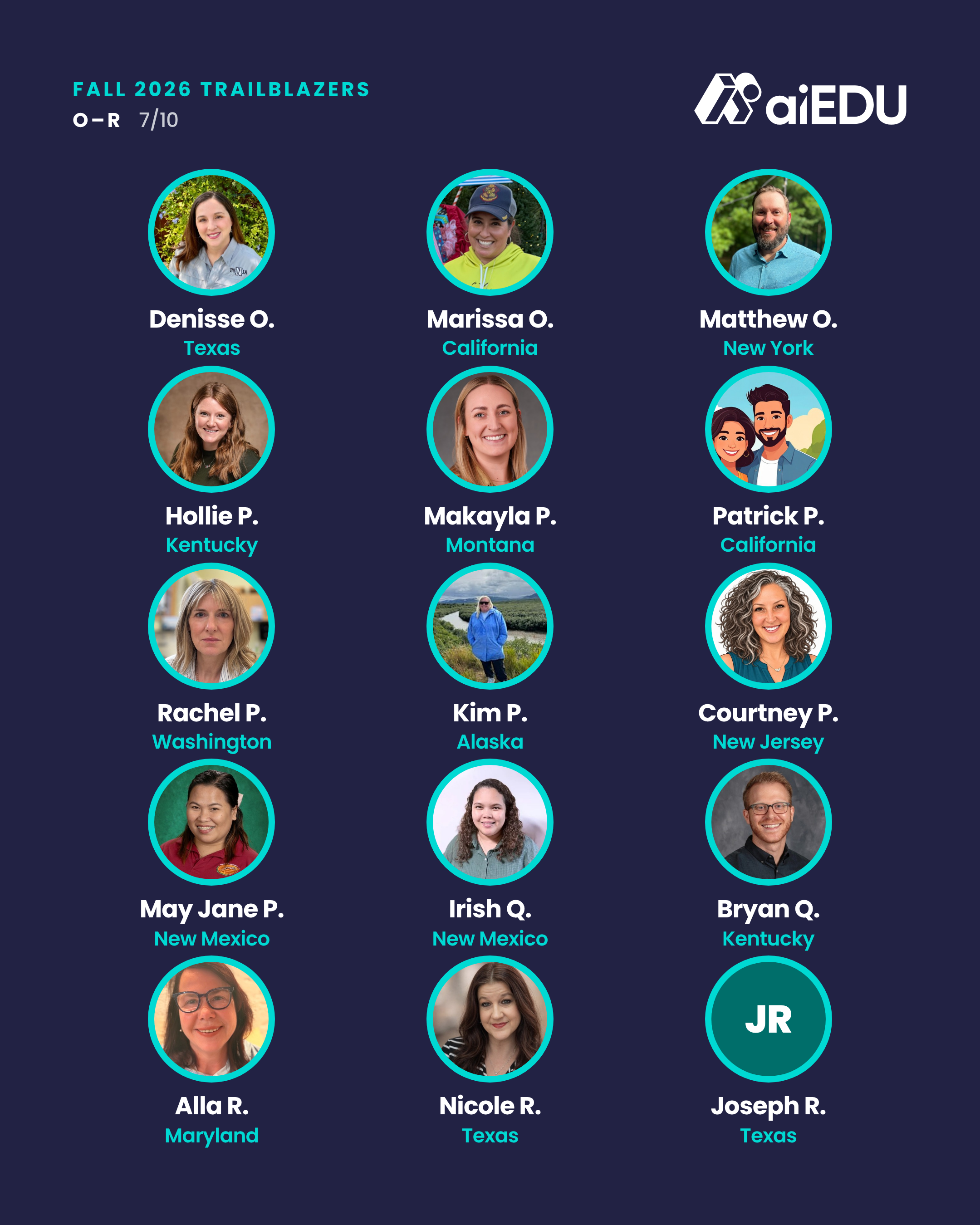
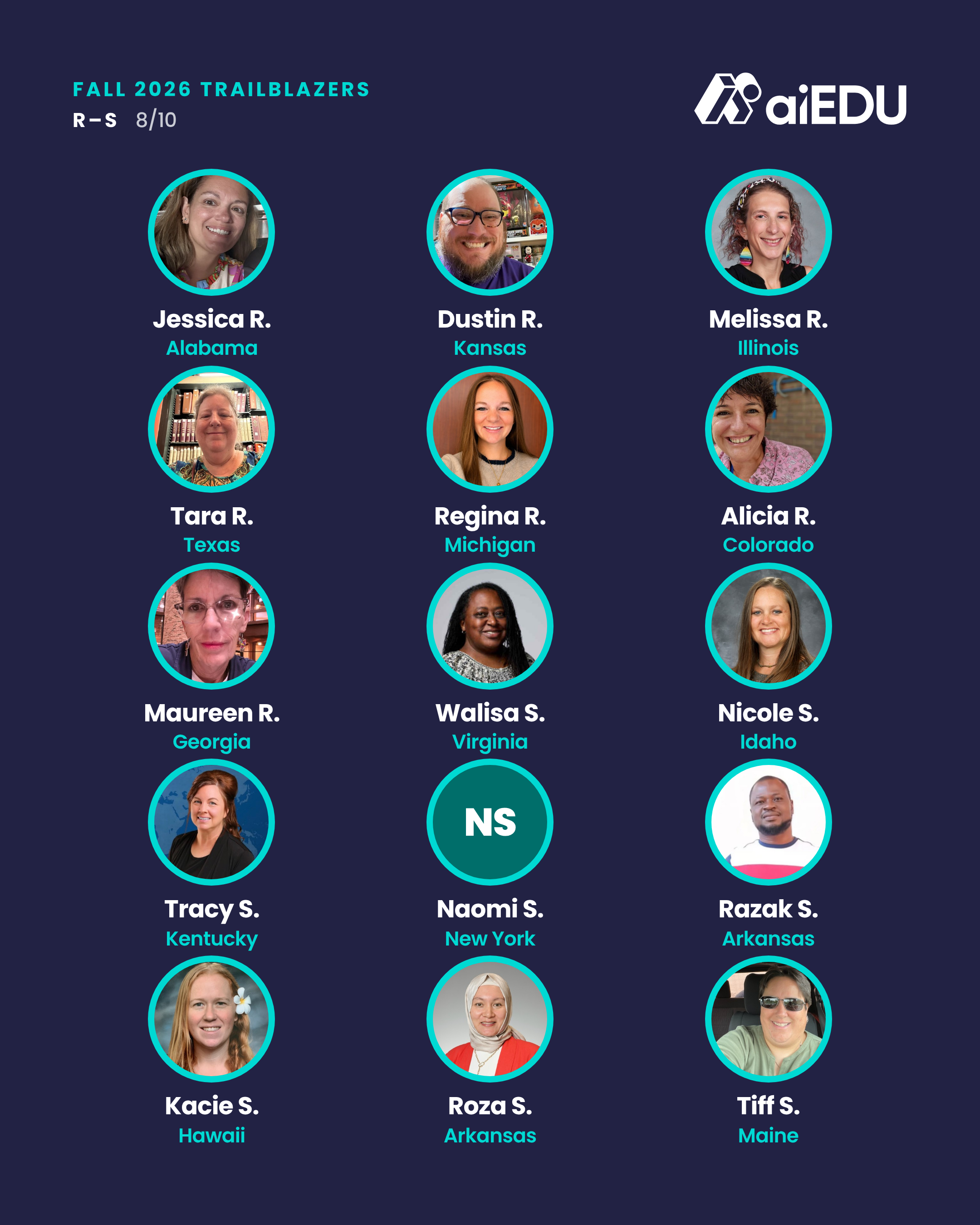
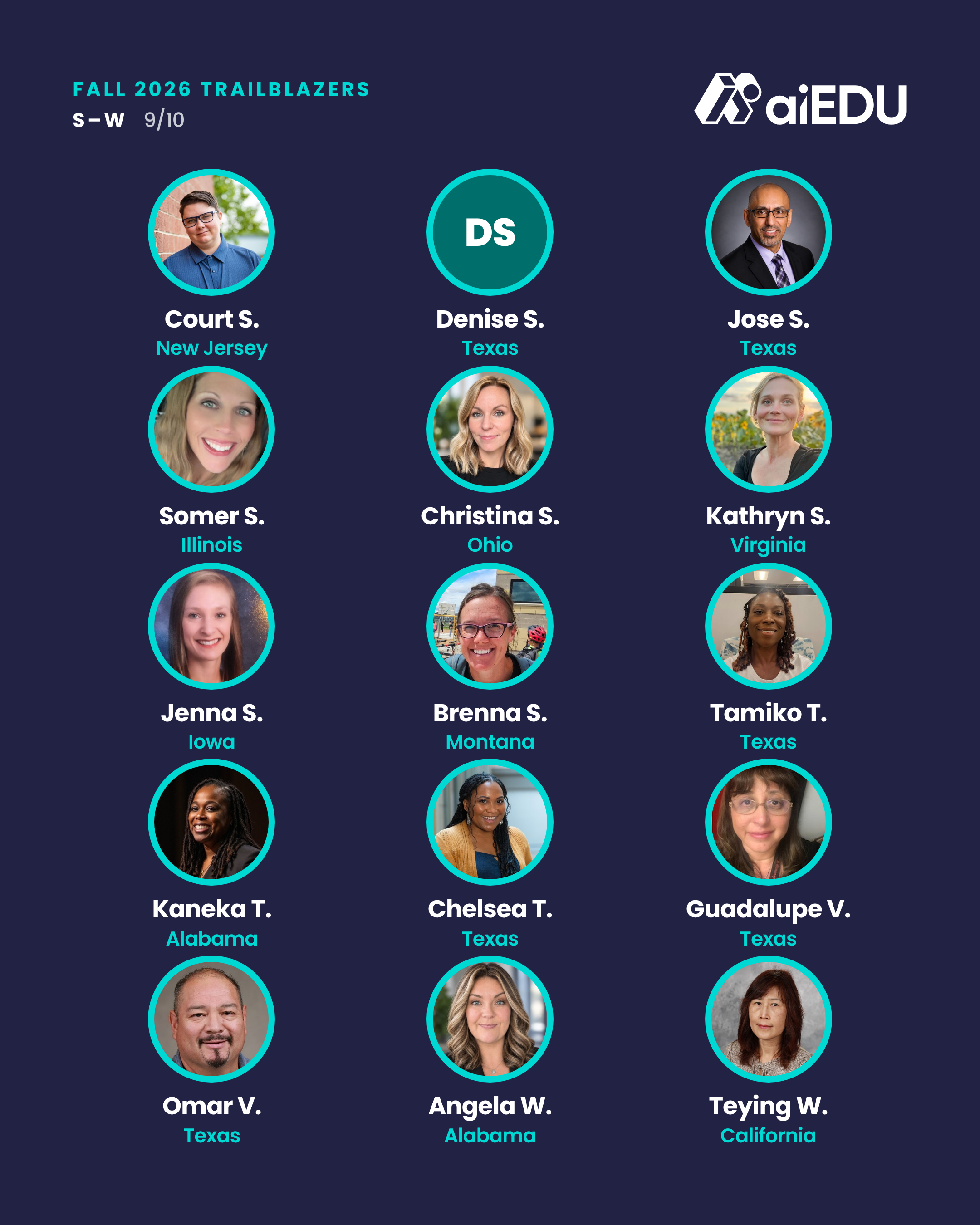
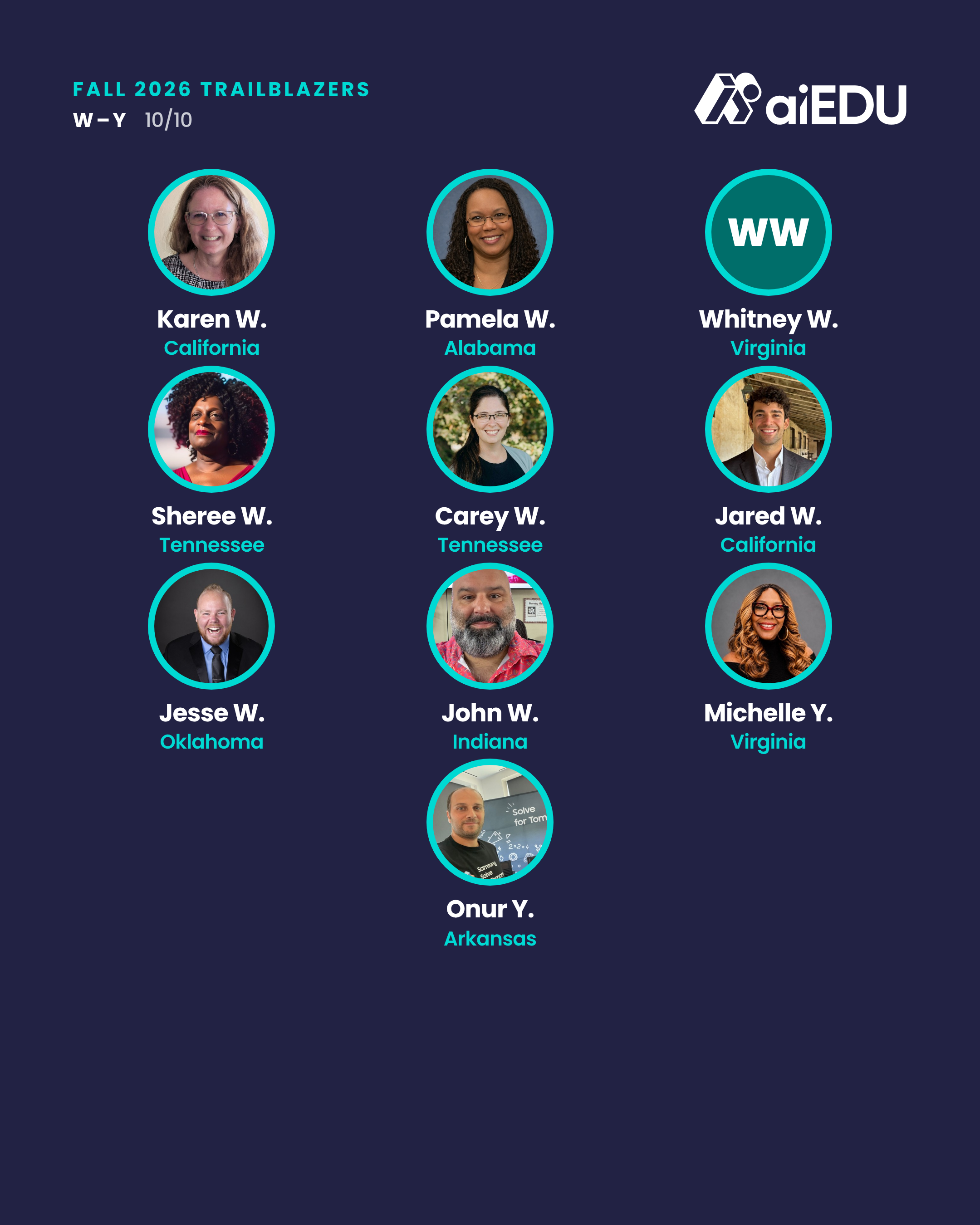
This fall, 145 educators representing 40 states, plus Washington, D.C., Puerto Rico and the Northern Mariana Islands, began aiEDU's Trailblazer Fellowship – a professional learning experience designed to deepen their understanding of artificial intelligence and explore how it can be thoughtfully integrated into K–12 classrooms. The content of this fellowship is rooted in aiEDU’s AI Readiness Framework and free curricular resources for K-12 teachers, all of which aim to ground student learning in the long-lasting human skills required to thrive in the age of AI.
They join a larger group of over 300 teachers across 16 cohorts who have participated in this Fellowship over the past three years – 90%+ of whom rated the Fellowship an “extremely" or "very" satisfying experience. Here is what makes this group distinct.
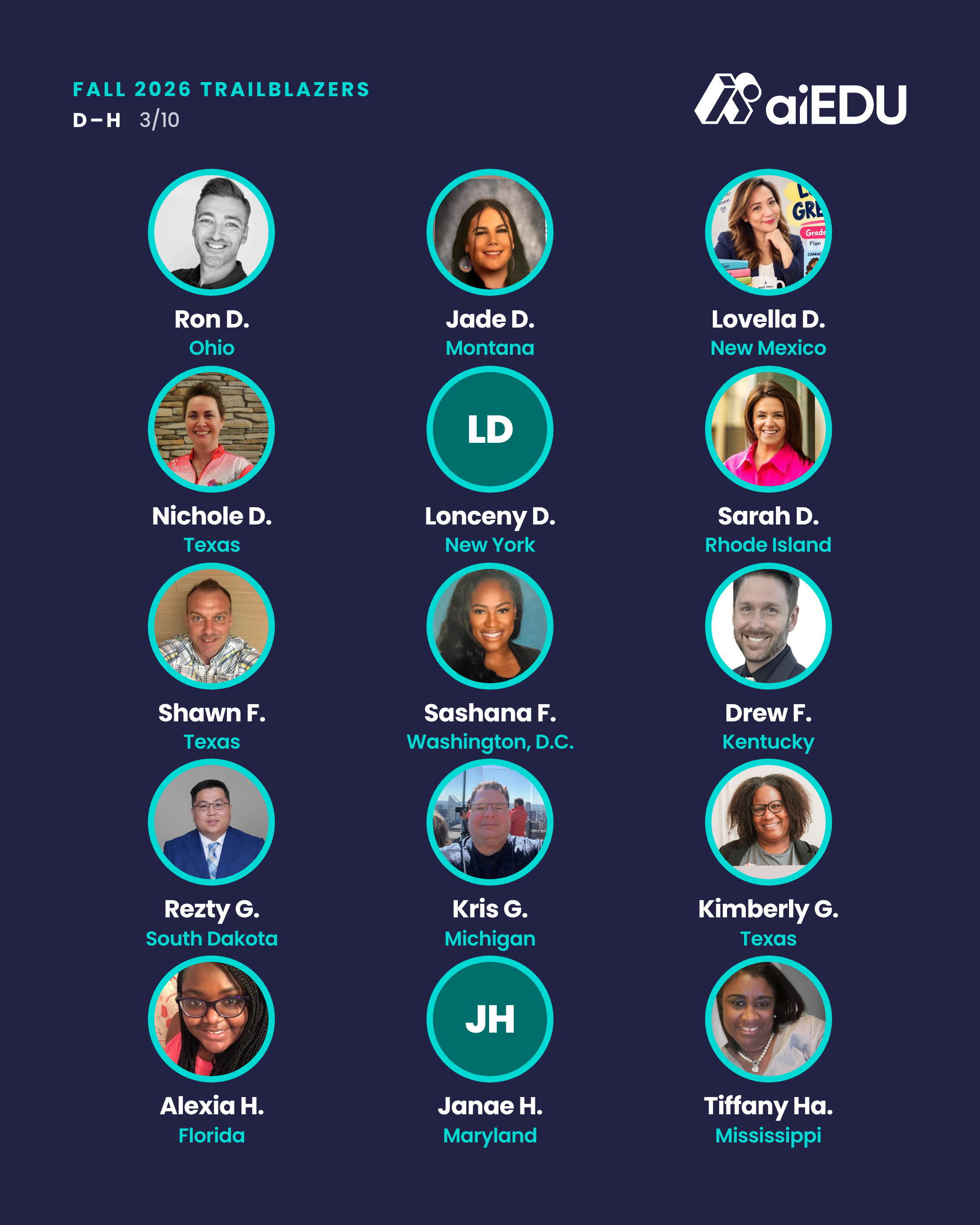
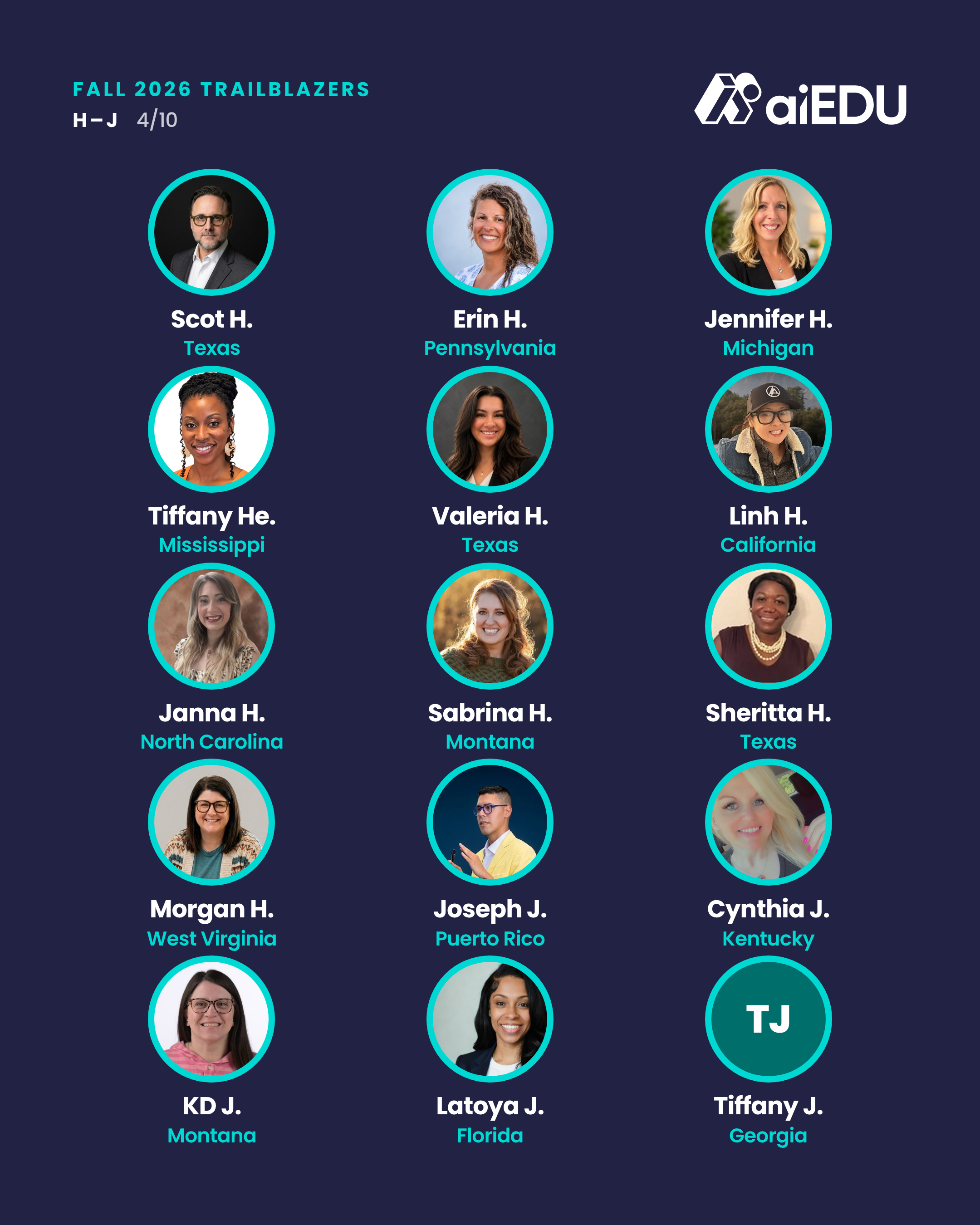
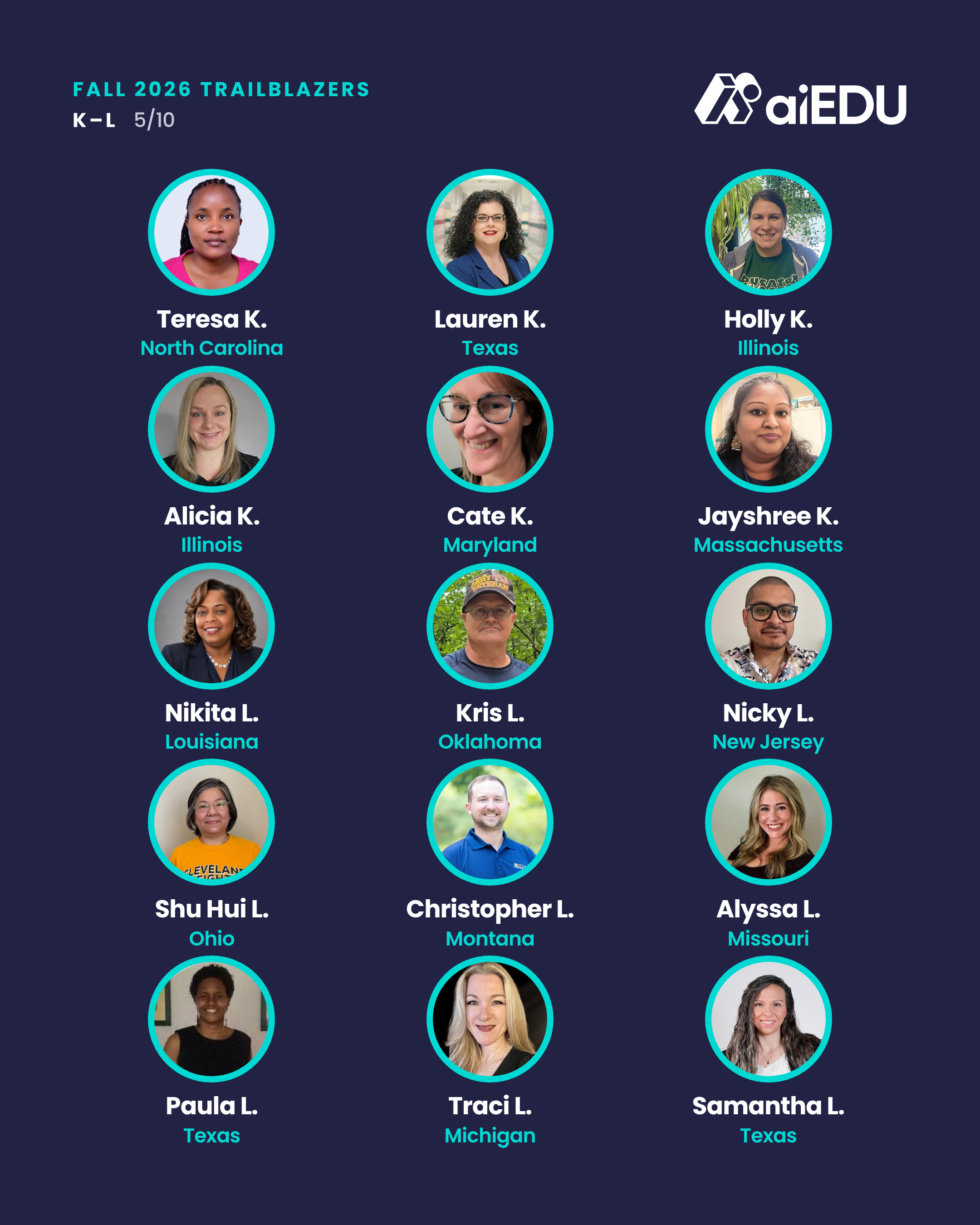
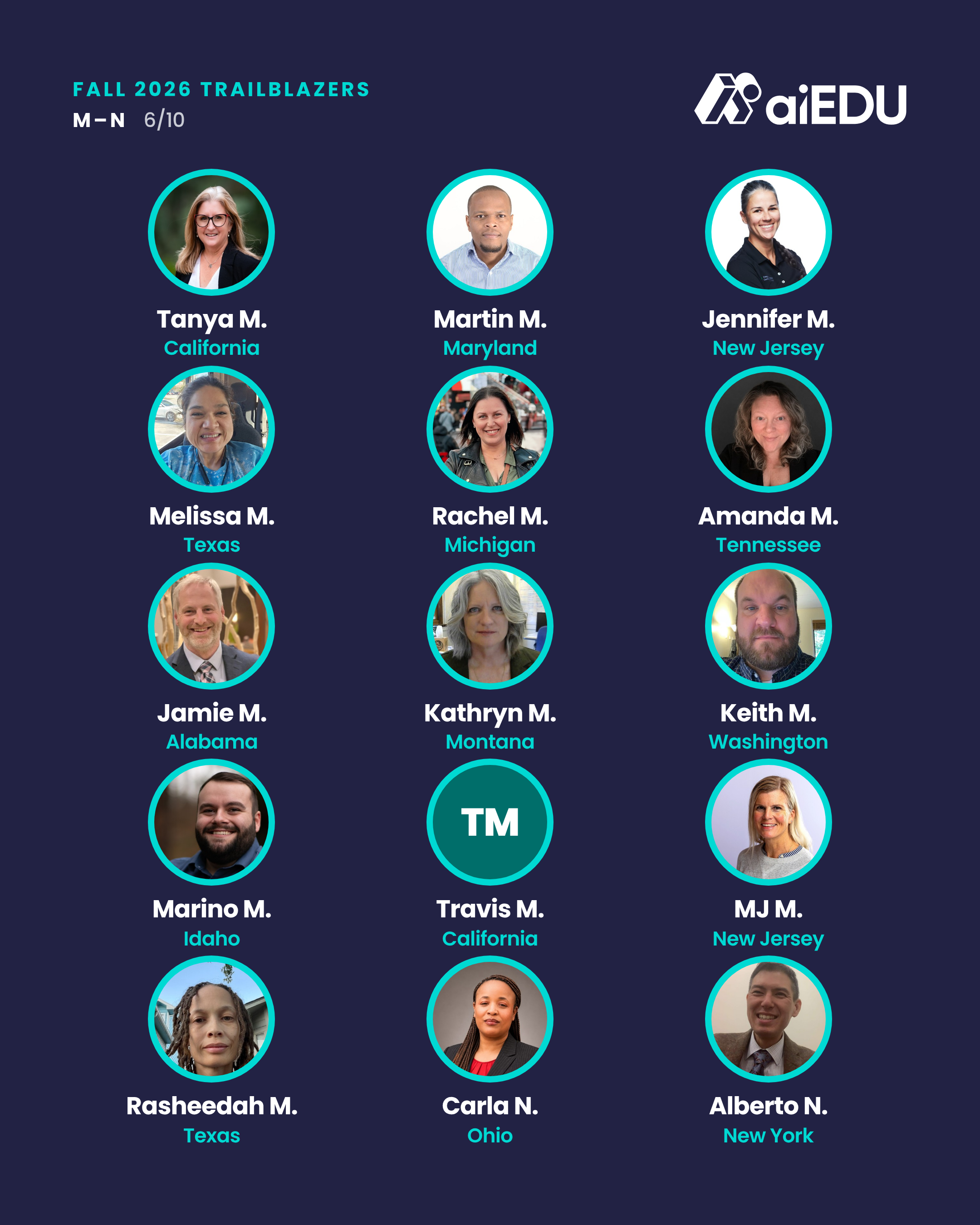
Promoting AI Readiness across every subject and grade
This fall's Trailblazers are organized into five cohorts built around who, where, and which subjects they teach:
National (grades 3–12)
Texas educators (grades 3–12)
Humanities and Literacy (grades 6–12)
Computer Science (grades 6–12)
Elementary (grades 3–5)
Trailblazers teach science, English, math, social studies, career and technical education, special education, and other subjects. In their applications, they discussed how AI Readiness looks different in each of those classrooms. A history teacher writes about sourcing and corroborating evidence. A math teacher writes about checking AI's reasoning.
An upper-elementary teacher in Oklahoma wrote about the habits students form early:
"I don't want their first lesson about AI to be that it makes things easier… For my students, AI readiness is ultimately about agency."
Experienced with and clear-eyed about AI
This is not a cohort of tech enthusiasts. The typical Trailblazer has taught for 15 years, and one in three has been in the classroom for two decades or more. Many arrived with real questions about AI.
"Honestly, I vacillate between being all in on AI in the classroom and all out," wrote one high school English teacher in Maine with 29 years of experience.
A fourth-grade teacher in Georgia put it this way:
"To be completely honest, my initial reaction to AI in the classroom was skepticism and I still feel that way… However, I also have to be realistic. AI is not a passing trend… Pretending it doesn't exist doesn't help anyone, so for me and my 4th graders, AI Readiness isn't about teaching kids to let technology do the thinking for them."
That combination of experience and healthy skepticism is exactly what makes Trailblazers' feedback valuable. When they test a lesson, they test it against years of knowing what works with real students.
Serving the students with the most at stake
Nearly two-thirds of Trailblazers teach in Title I schools, and almost half teach in schools where more than three-quarters of students qualify for free or reduced-price lunch. They teach in rural towns, in tribal communities, along the border and in classrooms full of multilingual learners. For many of them, AI Readiness is a question of opportunity. A middle school English teacher in El Paso, Texas, wrote:
"Many schools in my area don't have a plan as to how to teach AI or even allow it… I believe that a single AI course can change a generation's financial trajectory."
A shared conviction to build deeper critical thinking skills
Across every cohort, one idea continues to surface: AI Readiness isn't about learning to prompt a tool. It's about having the knowledge and judgment to know when the tool is wrong. A first-year high school science teacher in Colorado said it best:
"In my research, [a chatbot’s] wrong answer always sounded exactly as confident as the right one. Only knowing the chemistry told me which was which… So I don't want students who are good at prompting. I want students who know enough chemistry to catch a wrong answer, who can sit with a problem that doesn't resolve quickly, and who keep asking why."
At the end of the fellowship, this cohort will join over 300 Trailblazer alumni who are helping shape AI Readiness in K–12 education.
Learn more about the aiEDU Trailblazers Fellowship, and sign up for the aiEDU Educator Newsletter to hear about future cohorts.
Don’t forget to check out aiEDU’s free curricular resources for K-12 teachers and our AI Readiness Framework – all of which aim to ground student learning in the long-lasting human skills required to thrive in the age of AI.
The Fall 2026 Trailblazers Fellowship is made possible with support from Google.org, Booz Allen, Walton Family Foundation, and Leidos, and in partnership with Raspberry Pi Foundation and Quill.org.
