AI Readiness by the Numbers
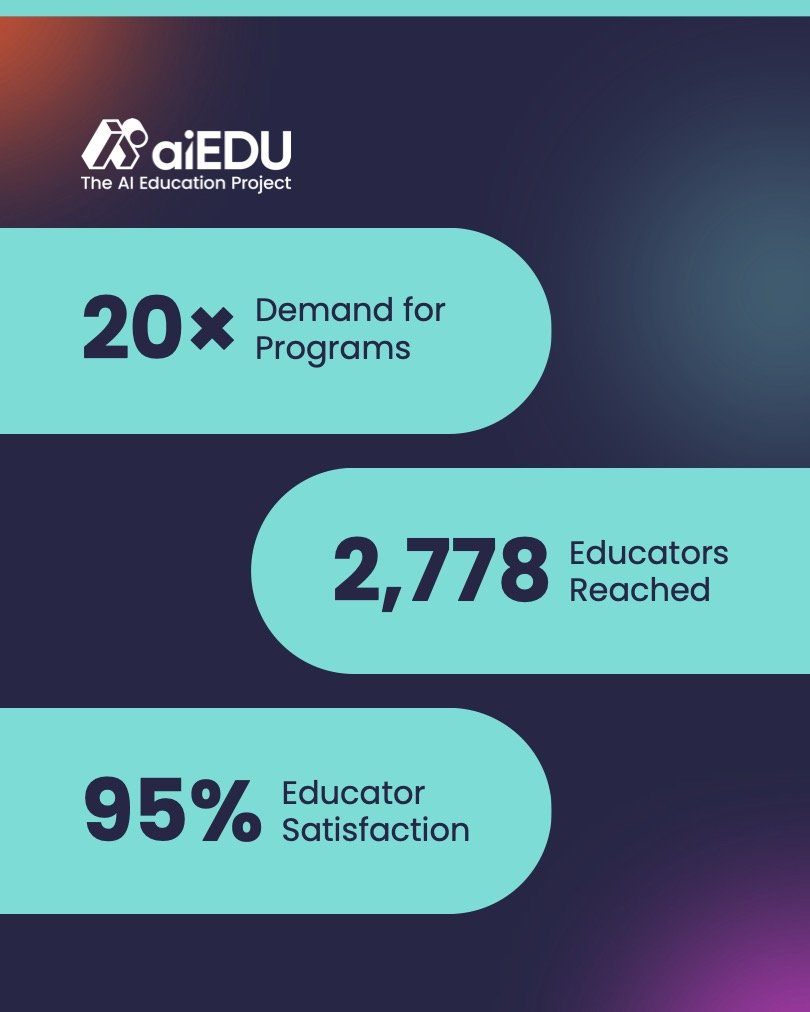
In the first half of 2026 we’ve seen a step increase in interest and engagement in the question we are dedicated to: how can we best prepare students to thrive in the age of AI?
Our spring Trailblazer Fellowship drew more than 600 applications for fewer than 175 spots. The Community Catalyst Program received 139 letters of intent from 45 states (roughly 20x what we can currently fund). Educators are deciding that they don't want to sit this moment out. In our programs, we are supporting educators in their from cautious and curious to confident, critical thinkers on AI and the implications for their students.
Today, we’re releasing our mid-year impact report covering work from January through June. You can read it here. Before you do, I want to offer some context on the numbers inside.
One challenge we have to consider in our measurement is that no standardized test for AI readiness or common standards to assess exists. We define “AI ready” as an understanding of how AI systems work, an ability to use them well as well as critically evaluate what those systems produce. It further means an ability to lead with the human advantage and apply AI strategically within that context. We have defined competencies for students, educators and institutions in our AI Readiness Framework v2 with an acknowledgement of the research that comes before us and the constantly evolving field of understanding. We are dedicated to continuing to refine both our definition and the quality of our measurement over time and have partnerships and research to that effect in progress.
We are also deepening our dedication to the depth and sustainability of our training. Over the past few years we have moved from the majority of our training being one-off learning sessions to a cohort based model. Our Professional Learning Community content, Professional Learning Series, Spark the Future train the trainer program and Trailblazer Fellowships are all programs that offer 5-10 hours of sustained professional learning. We believe that going deep with educators is necessary to do justice to the complexity and ambiguity of the questions we are grappling with today. At the same time, we want to continue to capture the wide and growing interest around this topic of AI Readiness through showing how many thousands of educators are showing up at conference sessions, downloading materials and engaging with our content in a light-touch way.
The first half, with sharper definitions
We reached 9,288 educators across our programming, events, and resources. Of those, 2,922 participated in professional learning, meaning structured training of several hours. The high engagement and satisfaction with these experiences we believe are because we are starting from the premise that regardless of sentiment about AI, we have a responsibility to young people to acknowledge it’s presence and impact and prepare them to succeed. We are not promoting AI, pushing it into schools or encouraging use. We are learning through doing, grappling with tough questions and talking honestly about implications on human relationships, teaching and learning, safety and our society.
We are especially proud that within that group, 122 educators across 30 states completed the Trailblazer Fellowship, our flagship teacher support program. 95% of fellows were very or extremely satisfied, and 91 percent reported considerable or significant growth in their AI readiness capacity. Their lessons on AI Readiness reached 4,607 students who engaged in meaningful learning experiences and debate around topics related to AI.
One of our fellows, Annie Jones, a high school English teacher in Holbrook, Arizona, put it better than I can: "The fellowship reminded me that AI readiness is really about empowering students to think, question, evaluate, and maintain their own voice in a world where AI is becoming more present in everyday life."
Beyond the Fellowship, we ran our first national Spark the Future cohort, our train-the-trainer model after several successful local cohorts have been completed which showed us a growing demand for educators to be supported to lead others in the AI Readiness work happening across the country. Additionally, we partnered with ten additional districts, systems and states, including a new statewide agreement with the Idaho Department of Education and a renewed partnership with the Ohio Department of Education and Workforce. We work alongside these entities in their toughest challenges related to preparing students for the age of AI and are honored to support them in this hard work.
The next six months
Applications for the Fall 2026 Trailblazer Fellowship cohort have just closed and we will be thrilled to welcome 5 new cohorts in a few weeks . Our third year of Community Catalyst grantees (7 orgs across 6 states) just began their grant periods, with funding directed toward rural and Indigenous communities. We’ll be launching applications for our National Spark the Future cohorts at the end of this month, and we're in conversations that could bring statewide partnerships to more states before the year is out.
We are investing in expanding our programs to meet demand, honing the quality and deepening our impact measurement as we grow and learn more, and releasing new curriculum products to support growing demand for students to learn AI Readiness skills while solving real world problems using AI. Stay tuned!