Teacher Spotlight: Cassie Owens Moore
There's a version of the AI conversation in education that gets loud fast. The debates, the think pieces, the staff meetings where someone's strongly for it and someone else is strongly against it, and most people in the room are just quietly trying to figure out what to think. Cassie Owens Moore was in that last group. And she'll tell you so herself.
Cassie is a school librarian at Seneca Middle School in Seneca, South Carolina; a role that puts her at the intersection of every subject, every grade level, and every kind of learner. She also teaches at the college level. So when AI started becoming impossible to ignore in education, the pressure to have something coherent to say about it landed on her from multiple directions at once. She didn't feel ready. She joined the aiEDU Trailblazer Fellowship anyway.
What she found there wasn't a set of talking points. It was a foundation.
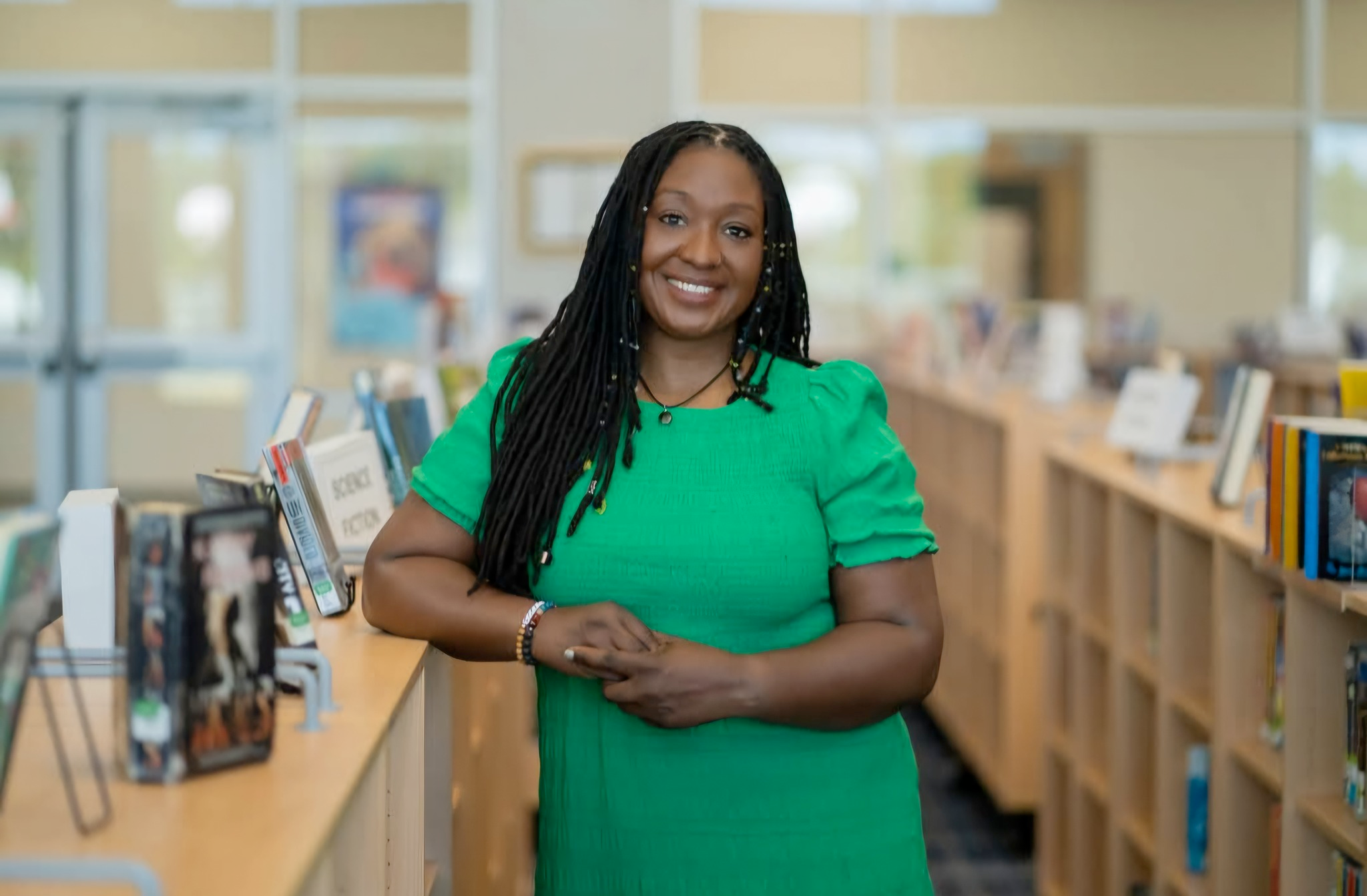
We sat down with Cassie to learn more about her learning journey and how she came to lead AI Readiness at her school.
What was your experience with AI before you joined the Trailblazers Fellowship?
Before the Trailblazers Fellowship, my experience with AI was mostly limited to everyday tools like Amazon chat features, Netflix recommendations, and ChatGPT. I didn't feel confident talking about AI with students, faculty, or staff because I honestly didn't understand it well myself. Like many educators, I knew AI was a hot topic in education — some people were excited about it, others strongly opposed it, and many weren't sure what to think. I definitely fell into that last group.
The Trailblazers Fellowship changed that for me. Through the program, I gained a much clearer understanding of both the benefits and the potential risks of AI in educational settings. The aiEDU curriculum, in particular, gave me the language and framework I needed to approach AI thoughtfully and responsibly. Now, I feel empowered not only to incorporate AI concepts into my own teaching but also to help students and colleagues develop informed, critical perspectives on emerging technologies.
What was the most insightful thing you learned during your time as a Trailblazer?
One of the biggest takeaways for me from the Trailblazers Fellowship was realizing how many students think about AI in very abstract or fictional ways, usually picturing a robot or something straight out of a sci-fi movie. That mindset highlighted a real gap in their understanding of how AI actually works. Many students didn't realize that AI systems learn from data, change over time, and improve with use. This experience really reinforced for me how important intentional AI instruction is in schools. When educators take the time to demystify AI, we help students build clearer, more accurate, and more critical understandings of the technology and how it shows up in their everyday lives.
How has your classroom practice benefited from AI?
I use AI as a support tool to design and adapt lessons, proofread instructional materials, and identify new sources and books. In my role as a middle school librarian, I collaborate across multiple grade levels and subject areas, and AI technologies help me personalize instruction and increase student engagement. Additionally, in my work as a college-level instructor, AI has supported the development of meaningful discussions and learning activities that promote critical thinking and active participation.
Would you recommend the Trailblazers Fellowship to your colleagues?
I would absolutely recommend the Trailblazers Fellowship to my colleagues. The curriculum is well designed, easy to use, and flexible enough for educators to customize with their own videos, images, articles, and other resources. Most importantly, students stay engaged throughout lessons because AI is already part of their everyday lives and will become even more relevant as they move into the future.
What Cassie describes — the shift from uncertain observer to confident practitioner — is exactly what the Trailblazer Fellowship is built to create. But what makes her story worth sitting with is the specific insight she walked away with: that students already have a relationship with AI, just not an accurate one. They picture robots and movie villains when they should be thinking about the recommendation engine that just shaped what they watched last night.
That gap isn't a small thing. A student who thinks AI is science fiction can't critically evaluate the AI that's already making decisions in their world. Cassie saw that gap clearly — and now she's the person in her school with both the language and the confidence to close it.
That's the work. And it's happening in a middle school library in South Carolina.
Interested in bringing this kind of practice to your school? Learn more about the aiEDU Trailblazer Fellowship and how educators across the country are leading AI readiness from the classroom up.