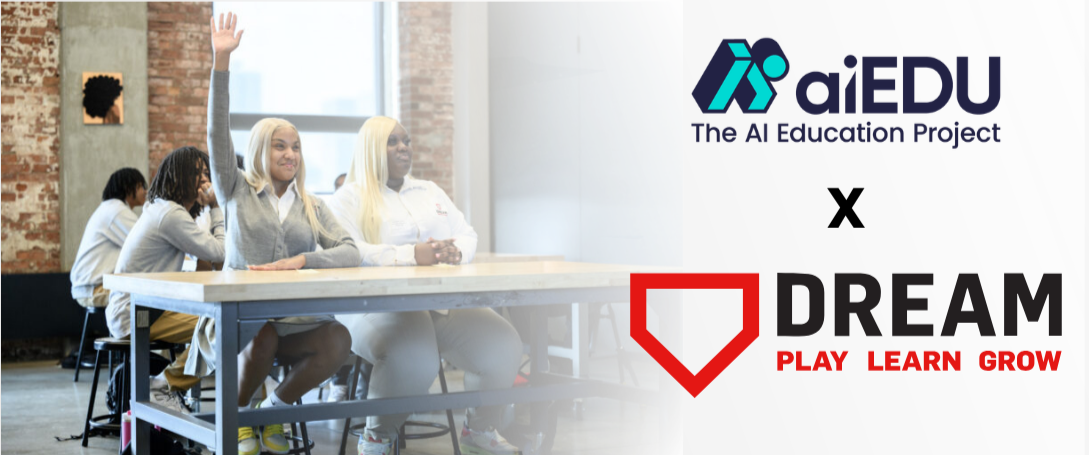
What does it look like when AI readiness becomes part of a school community; not as a pilot program or a future promise, but as something happening right now, in the middle of an ordinary school week? This spring, the answer is unfolding in East Harlem and the Bronx.
The AI Education Project is proud to partner with DREAM Charter Schools, provider of free, public schools serving students from pre-K through 12th grade, to bring AI literacy into middle school social studies classrooms in a way that feels relevant, thoughtful, and student-centered.
Where the Work Meets the Subject
The collaboration centers on the AI Foundations: Middle School History Series, which adapts DREAM's 6th- and 7th-grade social studies learning experiences to incorporate core concepts from aiEDU's classroom curricula: AI literacy, foundational understanding of artificial intelligence, and the responsible use of AI.
The choice to embed AI learning inside history classes rather than isolate it as a standalone tech unit reflects something important about how aiEDU thinks about AI readiness. It isn't about teaching students to use tools — it's about cultivating human judgment, critical thinking, and the ability to direct and question what AI produces. History classrooms, with their emphasis on evidence, perspective, and consequence, are a natural home for exactly that kind of thinking. When students examine how past societies made decisions with incomplete information, they're practicing the same mental habits they'll need to navigate a world shaped by AI.
A Partnership That Started with a Teacher
Dionna Rogers
Lead Teacher at East Harlem Elementary School
This collaboration didn't begin with a district mandate or a grant requirement. It started with a teacher.
Dionna Rogers, a Lead Teacher at East Harlem Elementary School and East Harlem Middle School and a Fall 2025 aiEDU Trailblazer, sparked the connection between the two organizations. But what's striking about her story isn't just that she made the introduction, it's how ready she already was to make it.
Before joining the Trailblazers Fellowship, Rogers had already built a strong foundation with AI in education. Through DREAM's culture of forward-thinking instructional practice, she regularly used AI to support lesson planning, create instructional materials, and reflect on student work. For two years, she served as the AI Champion at her campus, leading professional development for colleagues on how to use AI effectively and responsibly.
Then she went further. Last year, she helped lead DREAM's first fifth grade literacy pilot where students used AI to receive feedback on their writing aligned to New York State standards… and just as importantly, learned how to prompt AI thoughtfully and have conversations about privacy and appropriate use. "That experience showed me how powerful AI can be when it's introduced with intention," she reflects, "and was definitely the reason I was drawn to this fellowship."
What the Fellowship Added
Even for an educator with Rogers' depth of experience, the Trailblazers Fellowship opened new ground. One of the most meaningful parts, she says, was learning how other educators are teaching about AI, not just using it.
"Hearing how educators approach AI instruction at different grade levels pushed my thinking and gave me new ways to frame AI literacy in the classroom," she explains. The conversations also surfaced something she carries with her: an awareness that schools are at very different starting points. "That made our discussions around access and AI literacy even more important. We talked openly about how fast this space is moving and the responsibility we have to make sure all students are prepared to understand and navigate AI — not just a select few."
That last phrase matters. It's not a talking point, it's the animating concern behind the DREAM partnership itself.
Why This Community, Why Now
DREAM Charter Schools serve students in East Harlem and the Bronx, communities that have historically been underrepresented in conversations about technology and its future. The stakes of AI readiness are not evenly distributed. Students who develop the skills to understand, question, and work alongside AI will have a distinct advantage in higher education and the workforce. Students who don't risk falling further behind.
aiEDU's work is grounded in the belief that this gap is not inevitable. The DREAM partnership is one expression of that commitment: making sure AI literacy reaches every student, not just those in well-resourced districts.
For Rogers, the equity dimension and the instructional dimension are inseparable. In her own classroom, integrating AI has made her practice more focused and responsive. "I use AI to help analyze student performance, identify patterns, and plan instruction that directly targets what students need based on standards," she says. "It has also helped me create more timely interventions and adjust instruction quickly, instead of waiting until gaps grow larger." The result, she notes, has been some of the strongest student growth of her career.
What the Trailblazer Model Makes Possible
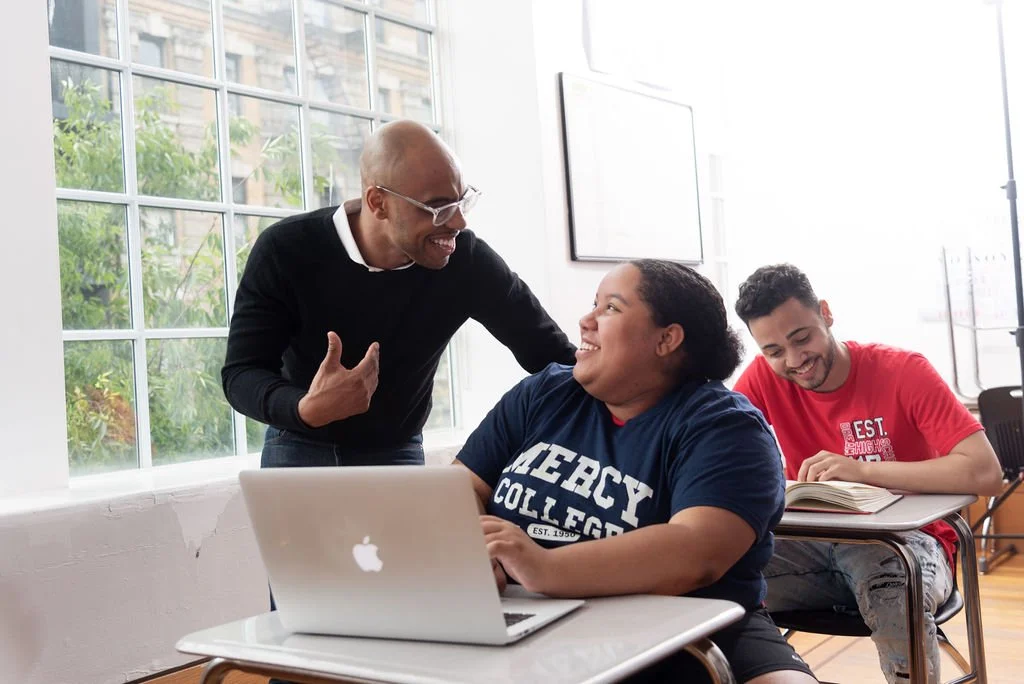
The DREAM partnership is, at its core, a story about what happens when you invest in teachers. Rogers didn't need to be convinced that AI matters in education. She'd already built that case, lesson by lesson, professional development session by professional development session. What the Trailblazers Fellowship gave her was a wider community, a deeper framework, and the credibility that comes from learning alongside over 300 Fellows across 43 states.
"The fellowship offers space to learn alongside educators from across the country, share real classroom experiences, and think critically about how AI fits into education now and in the future," she says. She would recommend it to any educator who wants to engage with AI thoughtfully and responsibly.
The partnership with DREAM is proof of what that investment can produce — not just a better-prepared individual teacher, but a bridge between two organizations, a new curriculum series, and a pathway for thousands of students to encounter AI as something they understand, not something that happens to them.
What Comes Next
This is only the beginning. The AI Foundations: Middle School History Series is currently underway, and a full partnership recap is coming; one that will show what students learned, what educators discovered, and what it looks like when AI readiness becomes genuinely embedded in a school community.
The goal isn't to make students comfortable with a particular tool. It's to help them understand what AI is, how it works, and what it means to use it wisely. That's a lesson worth teaching in any subject. And when it starts with a teacher who already believes it, it tends to stick.