Reflections from the RAISE Collaborative
Rural leaders designing the future of AI in education
On November 6–7, 2025, rural educators from across the Southwest gathered in Phoenix for the culmination of the RAISE AI Collaborative, a partnership between Leading Educators, aiEDU, the Arizona Institute for Education and the Economy at Northern Arizona University, and Collegiate Edu-Nation.
Over the course of the fall, district-based school teams from Arizona and Texas participated in a months-long professional learning community. They worked together through structured virtual sessions, coaching touchpoints, and design challenges that set them up for the in-person gathering.
There was a magic in bringing teams from seven school districts together:
Cumby Collegiate ISD
Floydada Collegiate ISD
Holbrook Unified School District
Miami Unified School District No. 40
Roscoe Collegiate ISD
Uvalde CISD
Wickenburg Unified School District
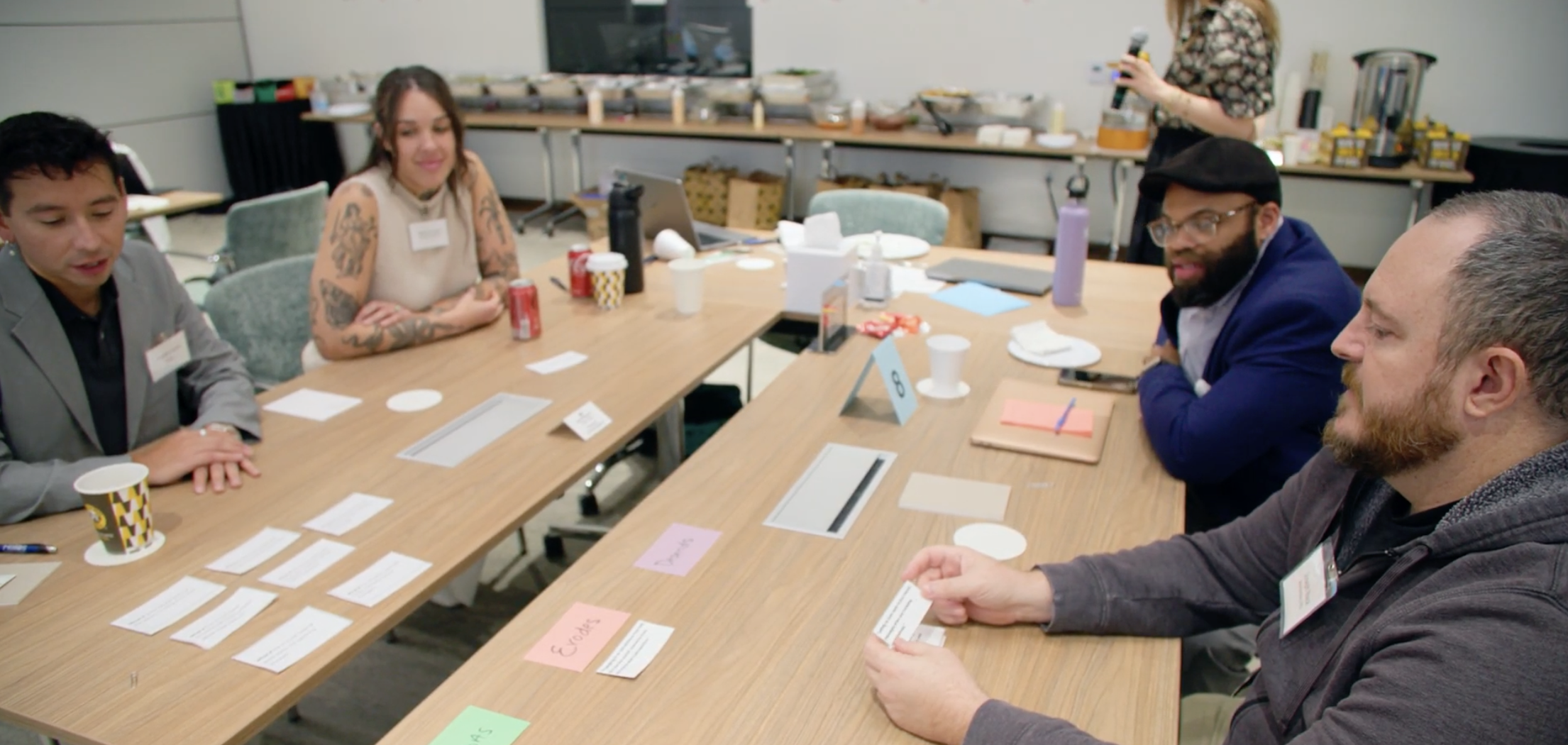
The convening was not a conference where ideas are simply presented to educators. Rather, it was the final step in a long-term community of practice that asked rural educators and system leaders to co-design the schools of the future from the vantage point of their own context and instructional vision.
What made this gathering powerful was how deliberate the design was. As one participant shared:
“It is rare to have district leaders, campus leaders, and teachers working together. It’s huge — and it’s the model we need everywhere.”
Each team included district leaders, school leaders, classroom teachers, and instructional coaches. Because of that structure, the conversations in Phoenix were not abstract. Teams were wrestling with real decisions about policy, infrastructure, curriculum — and instructional practice, and they were doing it together.
The work of imagining AI-enabled instruction happened alongside conversations about governance, student agency, and what it means to build an equitable and coherent instructional vision in small, rural districts.
The Work that Rural Districts Put In
RAISE brought together district teams of five to six members (teachers, instructional leaders, and superintendents) to spend a semester testing AI-enabled pedagogical, planning, and learning assessment strategies aligned to their instructional vision.
Each team defined a problem of practice, such as addressing student learning gaps or differentiating instruction. Then, they explored root causes to design an AI-enabled hypothesis using the AI Impact Cycle — a framework developed by Leading Educators to help school teams ground AI integration in their instructional vision.
Here are the steps:
Define a problem of practice: Identify a challenge that’s keeping students from fully achieving the district’s instructional vision.
Analyze root causes and readiness: Surface what’s driving that challenge and assess your system’s readiness for AI integration using aiEDU’s AI Readiness Framework.
Develop and focus a hypothesis: Pinpoint one high-leverage, AI-solvable area and consider how AI could help address it.
Design the AI-enabled strategy: Map out what success should look like for students and how the strategy aligns to instructional goals.
Test, reflect, and iterate: Implement, gather evidence, and refine through continuous coaching and peer learning.
Through ongoing coaching, professional learning communities (PLCs) and structured reflection, teams test and refine strategies in real time, with support that keeps the work focused on specific instructional routines, student experiences, and learning objectives. As one superintendent shared:
“Seeing district and campus leaders so actively engaged, so deeply invested, is rare. The level of commitment was incredible and essential for this kind of innovation to stick.”
Why This Matters for Rural Innovation
Rural and remote schools face challenges that can feel isolating: limited professional learning networks, inconsistent access to peer collaboration, and unclear district policies around emerging technologies.
Yet, rural educators also bring something essential to the national conversation about AI in education. They have a long history of adapting technology creatively, solving problems with limited resources, and centering relationships in their practice.
That combination, resourcefulness, and deep knowledge of students is exactly what the field needs as AI becomes a more present force in teaching and learning.
The RAISE Collaborative was built around that belief. Instead of asking rural educators to passively adopt new tools or follow external trends, we asked them to lead.
Each PLC session focused on helping district teams to:
Connect AI exploration to their existing instructional vision
Identify policy conditions needed for safe and effective use
Prototype and test an AI-enabled instructional practice
Surface local constraints and opportunities
Learn alongside peers facing similar realities
By the time all the teams arrived in Arizona this past November, they had already tested ideas, gathered student work, and reflected on early outcomes. The convening gave them the space to synthesize everything they had learned.
What We Saw in Phoenix
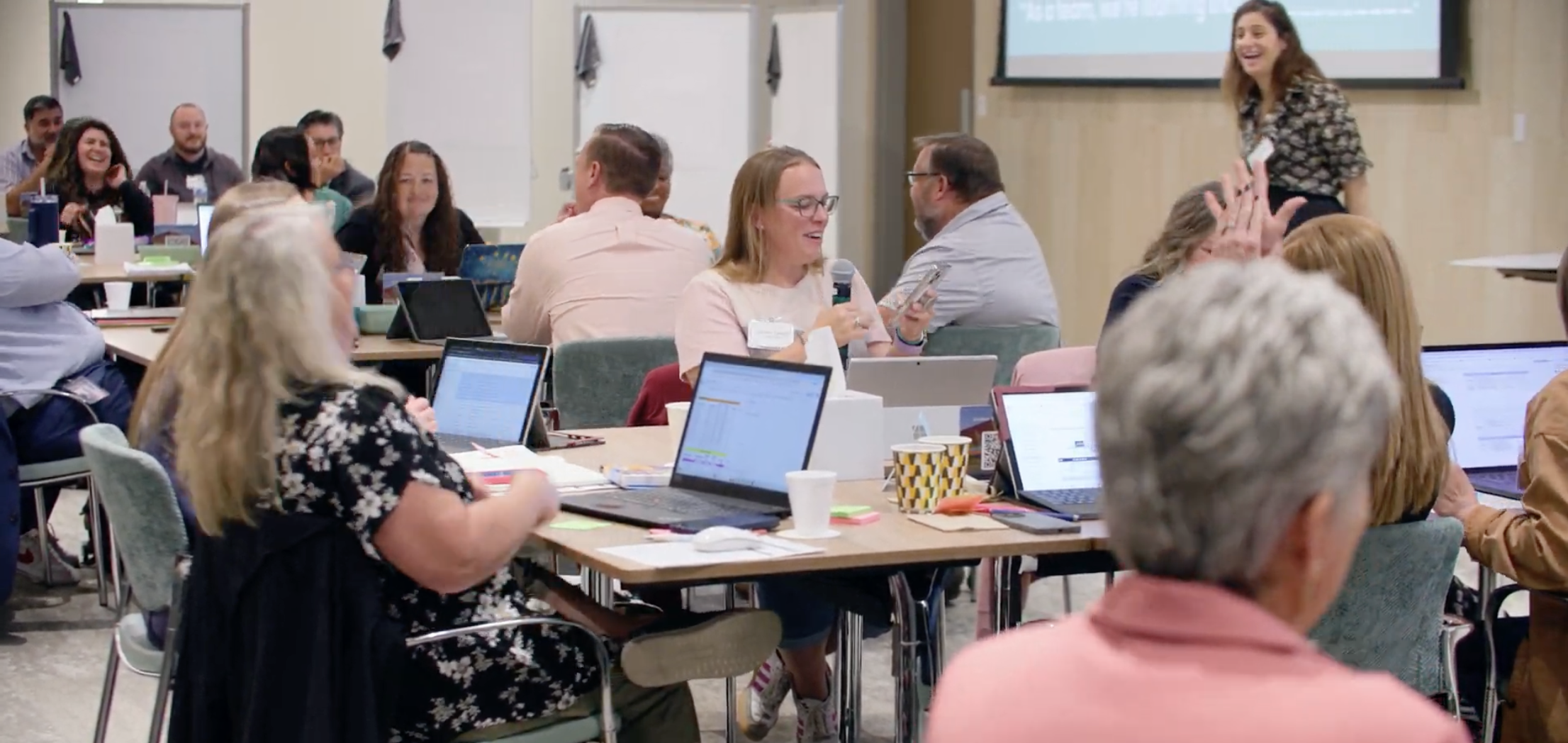
There was a different kind of energy in the room. Conversations moved quickly from "What can this tool do?" to "What will this mean for our district five years from now?"
Leaders debated where guardrails were necessary, when student choice should be prioritized, and how to help teachers build the skills named in aiEDU’s AI Readiness Framework. Teachers shared examples of student-centered designs they piloted during the fall. Teams looked at real artifacts from classrooms and considered how they might refine their approach in the next testing cycle.
More than anything, the convening made clear that innovation thrives in the community. One educator captured this feeling perfectly:
“Teachers have to be co-designers of what comes next… being part of this work is meaningful because so often things rain down on us.”
Rural teams were learning from each other in a way that respected the nuance of their contexts.
They were honest about constraints and equally honest about opportunities. They were shaping AI not as a solution in search of a problem, but as a set of tools that must be integrated thoughtfully, ethically, and in alignment with the human strengths at the center of their instructional vision.
A Few Reflections We’re Carrying Forward
Rural educators are not waiting for permission to innovate. They simply need access, support, and a trusted space to explore ideas alongside people who understand their communities.
System-level alignment is essential. When district leaders, instructional coaches, and teachers design together, AI exploration becomes coherent rather than scattered. This convening showed what happens when the whole system is in the room.
Policy and practice have to evolve together. Teams surfaced policy questions that only emerged because they were actively testing instructional practices. Likewise, their policy conversations sharpened their classroom prototypes. One cannot be separated from the other.
Rural voices must be centered in the national conversation. These educators understand the relationship-driven, student-centered realities of teaching in a way that often gets overlooked. Their leadership will shape how the field defines "AI-enabled instruction" for years to come.
Looking Ahead…
The work doesn’t end with this convening. Each team left Arizona with clear next steps for refining their instructional designs, drafting district-level policy recommendations, and continuing the cross-site learning that made this collaborative so strong. Over the coming months, the partnership team will publish case studies, tools, and insights from the cohort to support other rural districts across the country.
But the most important outcome is harder to quantify: a growing network of rural educators who see themselves not as adopters of AI, but as co-architects of its role in public education.
If we want AI integration in schools to be coherent, equitable, and grounded in real human needs, this is the model — educators leading, districts aligning, and communities of practice doing the slow, strategic work of designing for the future they want for their students.