
04 TRAILBLAZERS FELLOWSHIP SPOTLIGHTBy: Khushali Narechania, Director of Learning @ aiEDU
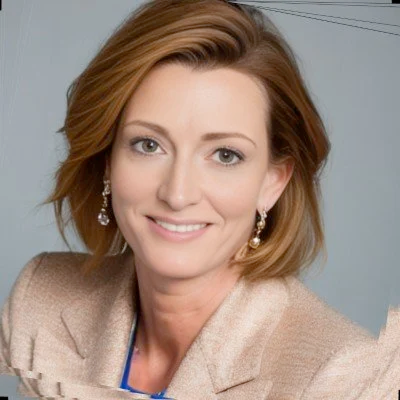
Over the past year, aiEDU’s Trailblazers Fellowship enrolled more than 200 educators who are looking to build their own skills and capacity for teaching AI literacy. The Trailblazer cohorts give K-12 teachers and administrators access to aiEDU resources so they can build AI-ready students with classroom exercises and a network of nationwide educators to share ideas with each other.
Stefany Palomba has been a science teacher in northeast Ohio for the past 27 years. Throughout her career, she has watched school technology transform from overhead projectors and library research to a world where knowledge is at students' fingertips.
In 2025, Stefany joined the second generation of aiEDU Trailblazers to explore her curiosities about AI in school settings. In her cohort, she found a community of educators who understood AI's potential beyond the fear of academic cheating. Upon completing the yearlong fellowship, Stefany spoke with aiEDU Director of Learning Khushali Narechania about how AI helps her in the classroom.
Khushali Narechania: Thanks for joining us, Stefany! You’ve been teaching for 27 years. What's the most important lesson from your early career that's carried you through to today?
Stefany Palomba: I want to say that the best thing or the most powerful thing you can do in the classroom is build relationships with your students.
It doesn’t matter how much technology you know, it doesn't matter how much content you have or can give to them. If they don't feel you're a genuine person, if you don't care about them, they're not going to learn in your classroom. Building relationships has been my primary concern and then learning comes after that.
Khushali: You teach in Canton, Ohio. Can you tell us about your students?
Stefany: I am in an urban city and many of our students are in poverty.
A lot of our kids come to school every day with trauma and a lot of problems that other students don't have to deal with. So in the mornings, we feel like they're starting at a different point than some other students from more affluent communities.
If anything, it teaches us that kids really are resilient and they can persevere no matter what their circumstances are. That's what keeps me coming back every day — seeing the perseverance and the strength that the human spirit has to become better people every day.
Khushali: How has AI helped you in the classroom?
Stefany: When it comes to our students and using AI, I really like the idea of finding ways to differentiate in my classroom.
We have some students who are Spanish-speaking students. I might be teaching 10th grade content standards, but also might have a student who's at an 8th grade reading level. My job is to teach them the content, and delivering it is what has made AI just this great answer to many of my problems that I face every day in the classroom.
I can translate within seconds. I can push out a copy. I can read through it before I deliver it to a student. Kids want their needs met immediately, and AI has really helped me meet their needs in a quick way while they're still engaged in what we're doing in the classroom.
Khushali: That's incredible! The stories we hear about AI tools being able to help with differentiation and producing individual plans in a more efficient way that’s specific to the unique needs of each student have been great. It’s been a really powerful shift.
So, how has joining the aiEDU Trailblazers Fellowship played into your development and supported the conversations you have with students about using AI?
Stefany: One to two years ago, I felt very alone looking at AI. There was a lot of misunderstanding about what AI was or what the potential could be.
It was great to find a community where I could talk to other teachers who were like-minded. We understood all of the great things that were coming out because of AI and how it could help our students as well as us in the classroom. I didn't feel that really anywhere else. At that time, my administrators didn't understand it. Everybody I talked to thought it was still about cheating. They didn't understand everything that it could do for us in our classrooms.
Khushali: How has your classroom or what you're doing with students evolved recently as we’ve seen the release of more AI tools geared towards teaching and learning?
Stefany: I'll give you an example from today. I teach bonding — covalent bonding, ionic bonding — and there are a few games where you can pair up the different bonds and show how they do the covalent bonds. I looked at some of my lessons from previous years and they were really long-winded directions. Lots of steps, lots of explanations.
But today, I went on Gemini, put in the game’s PDF, and asked it to give me step-by-step directions for a 9th grade reader: Where do I need to explain vocabulary? What's the foundational knowledge I need to make sure they know before we start this activity?
And in like 10 minutes, I had a presentation that I could put up in front of all my students and it just made it so much easier. They understood what we were talking about, I wasn't just reading a page and going through the directions. They could actually go through it, look at it, and we practiced before they had an opportunity to do it on their own.
Khushali: Amazing! Yeah, AI has given us quite an opportunity to rethink our own lessons, improve on things, and rethink what we're asking students to do and how we're asking them to show their thinking and work. On the flip side, what's your biggest concern about AI in education?
Stefany: One of my big concerns is that we're going to have another digital divide gap where our students aren't going to have the same access to AI and to tools that kids from more affluent areas are going to have. My fear is that the divide is going to get bigger. And I’m fearful because this is an opportunity for our students to close that gap.
Our inner-city kids, a lot of them don't have the same opportunities. They don't have a lot of people in higher-paying professions, so it's harder for them to navigate into social circles or even into those groups of people who are making a more livable wage. But having access to AI and putting it at their fingertips is a first step toward evening that playing field.
“Kids want their needs met immediately, and AI has really helped me meet their needs in a quick way while they’re still engaged in what we’re doing in the classroom.”

Khushali: What do you wish education leaders understood about AI?
Stefany: I think it's really important that they understand that divide I was just talking about and all the risks that are potentially there with that divide.
A lot of times, we're worried about literacy scores, graduation rates, attendance rates. We're bogged down with all of these other state mandates, and so AI is kind of put on the shelf. But I think that we need to make sure we don't leave our kids behind by just putting it on the shelf and saying that we'll look at it later.
AI is not an extra thing. It's influencing all aspects of life — so why is it not influencing all aspects of how we're thinking about schooling?
Khushali: That’s so true. We should look at how to actually bring AI into all these other things we're doing in schools and do so in a meaningful way. What's your boldest idea or vision for AI in education?
Stefany: I would like to see more teachers demonstrate to students how they use AI every day and how we can use it in our everyday lives.
There's a misunderstanding about what AI tools are and what the learning models are. It's really important for people to understand the difference between those and also the difference between literacy — are we talking about educating teachers about AI literacy and how to utilize it, or are we talking about students utilizing AI and the tools they would use? They're different.
When schools are making AI policies or guidelines, we need to be more concrete about what's acceptable use and what's not acceptable use. As soon as we do that in our classrooms, we'll be better prepared to have students come in and use AI in an honest and ethical way.
“When schools are making AI policies or guidelines, we need to be more concrete about what’s acceptable use and what's not acceptable use.”
Browse By Section
0102030405060708091011